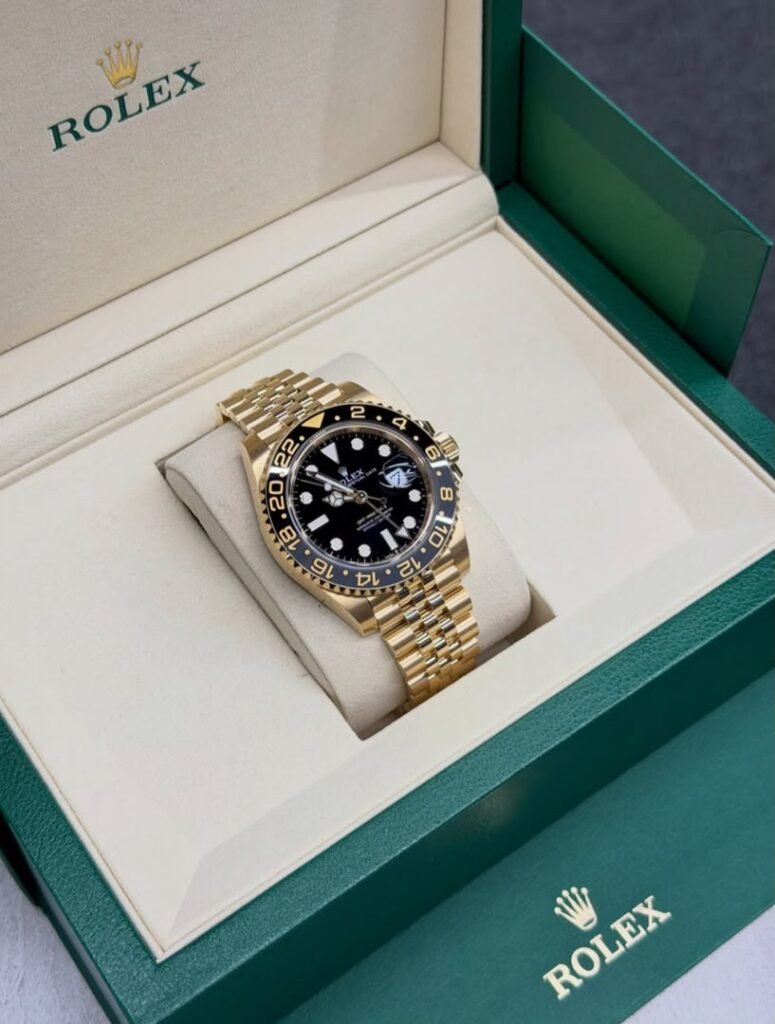
If you are searching for how to tell if a Rolex is real, you are already asking one of the most important questions a luxury-watch buyer can ask. Rolex watches are among the most recognizable and desirable timepieces in the world, but their popularity also makes them a frequent target for counterfeiters.
A genuine Rolex is the result of precise engineering, carefully controlled manufacturing, high-quality materials, and decades of watchmaking expertise. A counterfeit may imitate the appearance of a Rolex, but differences can often be found in the details. The challenge is that modern fake Rolex watches can be surprisingly convincing, particularly when viewed only through photographs.
That is why authenticating a Rolex should never depend on a single trick.
You should examine the watch as a complete object, comparing its model, reference, serial information, dial, case, crystal, bezel, crown, bracelet, clasp, movement, documentation, condition, and provenance.
This Rolex authentication guide explains the major things to look for when determining whether a Rolex is genuine. It also explains common mistakes buyers make, why some popular online “tests” are unreliable, and when professional authentication is the safest option.
At LuxeChronos, authenticity is treated as an important part of the luxury-watch buying experience. Our Luxury Watch Authenticity page explains the types of details that may be considered when evaluating a luxury timepiece, including reference information, serial information, movement characteristics, case and dial details, finishing, bracelet construction, and supporting documentation.
Why It Is Important to Know How to Tell If a Rolex Is Real
Learning how to tell if a Rolex is real is particularly important when purchasing a pre-owned watch.
Buying a second-hand Rolex can provide access to discontinued references, older models, unusual configurations, and watches that may not be readily available through the current retail collection. However, the secondary market also requires careful due diligence.
A counterfeit Rolex can potentially contain:
An inexpensive mechanical movement
An incorrect movement
Aftermarket components
Counterfeit documentation
Incorrect case materials
Incorrect bracelet components
A counterfeit dial
Altered serial information
A mixture of genuine and non-genuine components
There is another important issue: a watch does not necessarily have to be completely counterfeit to be problematic.
A Rolex can contain genuine Rolex components but still have non-original or incorrect parts. For collectors, the distinction between authenticity and originality can therefore be extremely important.
Rolex states that its guarantee does not cover watches that have been materially modified through the addition or substitution of non-genuine Rolex parts or components.
For this reason, the goal should not simply be to determine whether the Rolex logo is genuine. You should establish whether the watch itself is consistent with the model and configuration being represented.
1. Start With the Exact Rolex Model
The first step in learning how to tell if a Rolex is real is identifying exactly what you are looking at.
Do not begin with assumptions.
Determine whether the watch is a:
Rolex Submariner
Rolex Datejust
Rolex Daytona
Rolex GMT-Master II
Rolex Day-Date
Rolex Oyster Perpetual
Rolex Explorer
Rolex Explorer II
Rolex Sea-Dweller
Rolex Yacht-Master
Rolex Sky-Dweller
Rolex Land-Dweller
Other Rolex reference
The model name alone is not enough.
Each Rolex collection contains numerous references and configurations that can differ in size, material, dial, bezel, bracelet, movement, and production period.
For example, a Rolex Datejust from one generation may have characteristics that are completely different from a newer Datejust.
The same applies to the Submariner, Daytona, GMT-Master II, Day-Date, and other collections.
Therefore, identify the exact reference whenever possible.
2. Check the Rolex Reference Number
The reference number is one of the most useful pieces of information during authentication.
A reference identifies a particular Rolex model or configuration.
When checking a Rolex, compare the reference with the physical watch.
Ask whether the reference corresponds with:
Case size
Case material
Dial
Bezel
Bracelet
Movement
Date function
Production period
Overall configuration
For example, if a seller claims that a watch is a specific stainless-steel Rolex sports reference, but the watch contains characteristics associated with a different material or generation, further investigation is necessary.
A reference number that looks legitimate does not automatically prove authenticity.
Counterfeiters can copy genuine reference numbers.
The important question is whether the entire watch matches the reference.
This is one of the most important principles in Rolex authentication.
3. Examine the Serial Number Carefully
The Rolex serial number can provide useful information, but it should not be treated as an automatic authenticity certificate.
When learning how to tell if a Rolex is real, examine the serial information together with the rest of the watch.
Depending on the watch’s age and configuration, serial information can help with identification and documentation.
Compare the available information with:
The paperwork
Warranty documentation
Seller description
Production period
Reference
Watch configuration
Be cautious if the information appears inconsistent.
For example, if the seller says the watch is from a particular period but its configuration appears inconsistent with that claim, ask additional questions.
Also remember that counterfeiters can reproduce serial numbers.
A matching serial number is therefore supporting evidence, not conclusive proof.
4. Inspect the Rolex Dial
The dial is one of the most important areas to examine when determining whether a Rolex is genuine.
Look closely at the smallest details.
Examine:
Rolex Crown
The crown logo should have the correct shape and proportions for the model.
Dial Text
Look at the spelling, font, spacing, thickness, and alignment of every word.
Hour Markers
Markers should be positioned correctly and should have the appropriate finishing for the reference.
Minute Track
The minute markers should align correctly with the hour markers.
Printing
Text and indexes should appear crisp rather than blurry or uneven.
Dial Finish
The texture, color, brushing, sunburst effect, or other finishing should correspond to the reference.
Counterfeit dials can sometimes reveal themselves through tiny inconsistencies.
However, high-quality replicas can reproduce dial details surprisingly well.
Therefore, dial inspection is extremely useful, but it should be combined with examination of the movement and other components.
5. Look at the Rolex Crown Logo
The Rolex crown is probably the most recognizable symbol in luxury watchmaking.
It is also one of the first things counterfeiters reproduce.
When examining a Rolex crown, look for:
Shape
Proportions
Symmetry
Finishing
Position
Alignment
A poor-quality crown logo can be an obvious warning sign.
But an accurate-looking logo does not prove authenticity.
Modern counterfeit manufacturers can reproduce logos with impressive precision.
Therefore, treat the crown as one piece of evidence within a much larger authentication process.
6. Examine the Rolex Crystal
The crystal is another useful area when researching how to tell if a Rolex is real.
The appropriate crystal depends on the model and production period.
Modern Rolex watches commonly use sapphire crystal, while many vintage Rolex watches used acrylic crystal.
Therefore, you must first determine what crystal the particular reference should have.
Check:
Crystal material
Shape
Fit
Clarity
Magnification
Position
Relationship to the dial
Do not use a generic rule such as “all real Rolex watches have sapphire crystal.”
That would incorrectly classify many genuine vintage watches.
The correct approach is to compare the crystal with the specifications appropriate to the exact reference.
7. Understand the Rolex Cyclops
The Cyclops date magnifier is one of the most frequently mentioned features in online discussions about how to tell if a Rolex is real.
On applicable Rolex models, the Cyclops magnifies the date display.
However, the Cyclops should not be used as a standalone authenticity test.
A counterfeit can have a magnifying lens that looks convincing.
Instead, examine the complete date system:
Date numeral
Date window
Magnification
Lens positioning
Crystal
Dial
Case
Model reference
Also remember that not every Rolex has a date display.
For example, the Oyster Perpetual is a time-only model.
The correct question is not:
“Does this Rolex have a Cyclops?”
The correct question is:
“Does this particular Rolex reference have the correct date and crystal configuration?”
8. Inspect the Rehaut
The rehaut is the inner ring around the dial.
Many modern Rolex watches have branding and identification information engraved in this area.
When inspecting the rehaut, examine:
Engraving quality
Letter spacing
Alignment
Depth
Position
Relationship to the dial markers
Counterfeiters sometimes struggle to reproduce these details accurately.
However, this test has an important limitation.
Older Rolex watches may not have the same rehaut engraving characteristics as modern models.
Therefore, never declare a vintage Rolex fake simply because it lacks a feature associated with modern Rolex watches.
Authentication must always take the production period into account.
9. Examine the Case
The Rolex case should be carefully examined from multiple angles.
Look at:
Case shape
Case thickness
Lug proportions
Bezel
Crown guards
Brushing
Polishing
Transitions between surfaces
Caseback
Overall finishing
A genuine Rolex case is engineered with precise dimensions and finishing.
A counterfeit may have:
Incorrect proportions
Rough transitions
Excessive polishing
Poor brushing
Incorrect bezel geometry
Incorrect crown guards
But a heavily polished genuine Rolex can also look different from an untouched example.
This is why condition must be taken into consideration.
A worn or polished watch is not automatically counterfeit.
10. Inspect the Caseback
The caseback can provide another important clue.
Rolex has used different caseback configurations throughout its history.
Therefore, compare the caseback with the exact model and period.
Be cautious if the watch has an unusual configuration that does not correspond to the claimed reference.
A transparent exhibition caseback, for example, should prompt additional investigation on a Rolex model where such a caseback would be unexpected.
But once again, the correct approach is comparison with the exact reference rather than relying on a universal rule.
11. Examine the Rolex Bracelet
The bracelet is often overlooked when people search for how to tell if a Rolex is real.
It should not be.
A Rolex bracelet has its own engineering and finishing characteristics.
Examine:
Links
Link construction
End links
Brushing
Polishing
Crown logo
Clasp
Engravings
Bracelet reference information where applicable
Fit between bracelet and case
A counterfeit bracelet can feel rough, loose, or poorly finished.
However, genuine Rolex watches can have replacement bracelets.
Therefore, an incorrect bracelet does not automatically mean that the entire watch is fake.
The key question is whether the bracelet is:
Original to the watch
A genuine Rolex replacement
An aftermarket bracelet
Incorrect for the claimed reference
This distinction can be particularly important when buying collectible Rolex watches.
12. Check the Rolex Clasp
The clasp deserves its own inspection.
Open it and look carefully at its:
Construction
Crown logo
Engravings
Folding mechanism
Finishing
Alignment
Fit
A genuine Rolex clasp should have a high-quality, engineered feel.
Potential warning signs include:
Poorly formed logos
Rough edges
Loose mechanisms
Incorrect engravings
Poor finishing
Unusual construction
Again, however, remember that genuine Rolex watches can have replaced components.
The clasp is evidence—not an absolute verdict.
13. Do Not Rely on the “Rolex Ticking” Myth
One of the most common pieces of advice online is:
“A real Rolex does not tick.”
This is misleading.
Rolex mechanical movements operate at high frequencies, which can make the seconds hand appear to move smoothly.
But this visual characteristic is not a reliable authentication test.
A counterfeit manufacturer can design a movement that imitates the appearance of a smoothly moving seconds hand.
Likewise, listening to the watch does not establish authenticity.
The movement itself needs to be examined if there are serious doubts.
14. Examine the Rolex Movement
The movement is among the most important components when learning how to tell if a Rolex is real.
A genuine Rolex mechanical movement has a specific architecture and characteristics corresponding to the model and production period.
A qualified watchmaker can examine:
Calibre
Bridges
Rotor
Engravings
Component arrangement
Finishing
Jewels
Movement architecture
Mechanical condition
The movement should correspond with the claimed Rolex reference.
An incorrect movement can indicate:
Counterfeit watch
Incorrect restoration
Replacement movement
Frankenwatch
Misrepresented watch
However, opening a Rolex should not be attempted casually.
A professional should perform the inspection because improper handling can damage the watch or affect water resistance.
Rolex’s official servicing process includes examination, dismantling, cleaning, reassembly, lubrication, and extensive testing of the watch.
15. Examine the Weight—but Don’t Depend on It
Some buyers try to determine whether a Rolex is genuine simply by holding it.
Weight can provide useful information, but it is not definitive.
The weight of a watch depends on:
Case size
Material
Bracelet
Movement
Bezel
Configuration
A platinum Rolex will obviously behave differently from an Oystersteel model.
Likewise, a watch with a leather strap will weigh differently from one with a full metal bracelet.
A counterfeit made from inexpensive materials may feel unusually light, but weight should always be compared against a known example of the same reference.
16. Check the Materials
Rolex uses different materials across its collections.
Depending on the model, you may encounter:
Oystersteel
Yellow gold
White gold
Everose gold
Platinum
RLX titanium
Two-tone combinations
If a seller claims that a watch is made from a particular material, verify that the reference was actually produced in that material.
A counterfeit may imitate the appearance of gold or platinum without actually using the appropriate material.
Material testing may therefore be useful during professional authentication.
17. Examine the Documentation
Documentation can provide valuable supporting evidence.
Depending on the watch, you may receive:
Warranty card
Guarantee card
Original receipt
Service records
Manuals
Tags
Box
Certificates
Other paperwork
But documentation alone does not prove that the watch is authentic.
Counterfeit documentation exists.
A genuine box can be paired with a fake watch.
A genuine card can be paired with the wrong watch.
Therefore, compare the documents with the physical watch.
Check:
Reference
Serial information
Dates
Model
Seller information
Purchase details
The documentation should tell a consistent story.
18. Does a Rolex Box Prove Authenticity?
No.
A Rolex box is an accessory, not an authentication certificate.
Boxes can be:
Lost
Replaced
Sold separately
Counterfeited
Matched incorrectly
The same principle applies to other accessories.
A complete set may be desirable from a collector’s perspective, but the presence of a box and papers should never replace examination of the actual watch.
19. Be Careful With Rolex Guarantee Cards
A Rolex guarantee card can be valuable supporting documentation.
Rolex explains that its five-year international guarantee for new watches is associated with qualifying purchases through Official Rolex Jewelers and that the guarantee card is completed and dated by the Official Rolex Jeweler.
But a card by itself cannot authenticate the watch sitting next to it.
Always compare the available information with the watch.
If the card says one thing and the watch appears to represent another reference, stop and investigate before purchasing.
20. Consider the Seller’s Reputation
One of the most effective ways to reduce the risk of purchasing a fake Rolex is to evaluate the seller before examining the watch.
Ask:
How long have they been selling watches?
Do they provide detailed information?
Do they disclose the reference?
Do they disclose condition?
Do they explain whether parts have been replaced?
Do they have a clear return policy?
Are they willing to allow professional inspection?
Do they provide clear photographs?
Is the price realistic?
A seller who refuses reasonable questions should be treated cautiously.
A seller who pressures you to pay immediately should also raise concerns.
21. Be Suspicious of an Unrealistically Low Price
Price is not an authentication method, but it is an important warning signal.
If a Rolex is advertised substantially below reasonable market expectations, ask why.
There may be a legitimate reason.
For example, the watch may:
Be heavily worn
Need servicing
Be missing accessories
Have replacement components
Have a damaged case
Have a less desirable configuration
But a dramatically low price can also indicate a counterfeit or other problem.
Do not allow the promise of a “once-in-a-lifetime deal” to replace proper due diligence.
22. Understand Frankenwatches
One of the more advanced concepts in Rolex collecting is the Frankenwatch.
A Frankenwatch may contain genuine components from different watches or sources.
For example, a watch might contain:
Genuine Rolex movement
Genuine Rolex case
Replacement dial
Different hands
Replacement bracelet
Some or all of these components may be genuine Rolex parts.
Yet the watch may not represent the original factory configuration.
This is why experienced collectors distinguish between:
Authentic components
and
Original factory configuration.
Both can matter when determining the value and desirability of a Rolex.
23. Can a Genuine Rolex Have Replacement Parts?
Yes.
Rolex watches are designed to be serviced throughout their lives.
Parts can be replaced when necessary.
The important distinction is whether the replacement parts are genuine and whether they are appropriate for the watch.
Rolex’s guarantee specifically excludes watches that have been materially modified with non-genuine Rolex components.
If you are purchasing a pre-owned Rolex, ask whether any major components have been replaced.
Important areas include:
Dial
Hands
Bezel
Bracelet
Crown
Crystal
Movement components
For collectors, originality can have a major impact on desirability.
24. Vintage Rolex Authentication Requires Extra Care
Vintage Rolex watches require a different level of expertise.
Older watches may naturally show:
Patina
Scratches
Fading
Discoloration
Case polishing
Bracelet stretch
Replacement crystals
Service components
A vintage Rolex should not be judged using modern Rolex standards alone.
For example, the absence of modern rehaut engraving does not automatically indicate a fake.
Likewise, an acrylic crystal can be perfectly correct for an older reference.
Vintage authentication requires knowledge of what Rolex produced during the relevant period.
25. How to Tell If a Rolex Is Real From Photos
Sometimes you need to evaluate a watch before seeing it in person.
High-quality photographs can provide useful information.
Ask for clear images of:
Front
Dial
Crown
Bezel
Case sides
Caseback
Bracelet
Clasp
Rehaut where applicable
Serial/reference areas where appropriate
Guarantee card
Box
Accessories
Avoid relying exclusively on edited marketing photographs.
Ask for current photographs taken specifically for you.
However, remember that photographs have limitations.
A sophisticated counterfeit can look extremely convincing in pictures.
For a high-value transaction, physical authentication remains preferable.
26. Use Official Rolex Information as a Reference
One of the strongest resources available to buyers is Rolex itself.
Rolex states that genuine new Rolex watches should be purchased through its Official Rolex Jewelers, who are authorized to sell and maintain Rolex watches and can guarantee the authenticity of each part of the watch.
This is important because authentication is not simply about whether the watch resembles a Rolex.
It involves confirming that the watch and its components are consistent with genuine Rolex manufacturing and the stated model.
You can use the official Rolex website to research current collections and manufacturer information.
For current pre-owned watches, Rolex also operates its Certified Pre-Owned programme.
27. What Is Rolex Certified Pre-Owned?
Rolex Certified Pre-Owned, often abbreviated as RCPO, is the brand’s own certification programme for pre-owned Rolex watches.
Rolex states that watches participating in the programme are authenticated in Rolex workshops, fully serviced, rigorously tested, and covered by a two-year international guarantee.
Rolex also explains that its experts verify the original configuration and inspect the watch in detail.
This makes the programme particularly relevant to buyers who want manufacturer-backed authentication for a pre-owned Rolex.
The programme is available through participating Official Rolex Jewelers.
Rolex states that only Rolex can confirm the authenticity of a Rolex watch through this programme.
28. Rolex Certified Pre-Owned vs. Independent Authentication
These are not necessarily the same thing.
Rolex Certified Pre-Owned is a specific Rolex programme.
Independent authentication is performed by a qualified watchmaker or specialist outside that programme.
Both can provide useful information, but they should not be described as identical services.
If a seller says that a watch is Rolex Certified Pre-Owned, verify the actual certification and documentation.
Do not assume that the words “certified,” “authenticated,” or “verified” mean that Rolex itself performed the authentication.
29. How LuxeChronos Approaches Authenticity
At LuxeChronos, authenticity is an important part of how luxury watches are evaluated and represented.
Our Authenticity page explains that the assessment of a luxury watch may consider:
Brand
Model
Reference
Serial information
Case
Dial
Movement
Engravings
Bracelet
Clasp
Finishing
Documentation
Accessories
Overall consistency
The exact process can vary according to the brand, model, age, condition, and available documentation.
This approach is important because no single feature can reliably authenticate every Rolex.
30. Looking for a Specific Rolex?
If you are searching for a particular Rolex reference, buying from a reputable source can simplify the process.
LuxeChronos offers a private luxury watch sourcing service for collectors looking for specific watches and configurations.
You can provide details such as:
Rolex model
Reference
Year
Condition
Dial
Bezel
Bracelet
Box and papers
Budget
For example, you may be searching specifically for a Rolex Submariner, GMT-Master II, Daytona, Datejust, or another reference.
Providing the exact reference whenever possible makes it easier to identify the watch you actually want.
31. What to Do Before Buying a Rolex
Before committing to a purchase, create a simple checklist.
Step 1: Identify the Model
Determine the exact Rolex collection.
Step 2: Identify the Reference
Confirm the reference and compare it with the physical watch.
Step 3: Research the Production Period
Make sure the configuration makes sense for the claimed period.
Step 4: Inspect the Dial
Check text, markers, logo, date, and finishing.
Step 5: Examine the Case
Check dimensions, finishing, bezel, crown, and caseback.
Step 6: Inspect the Bracelet
Check links, clasp, markings, and compatibility.
Step 7: Examine the Movement
Have a qualified professional inspect it when appropriate.
Step 8: Review Documentation
Compare warranty cards, receipts, service records, and other documents.
Step 9: Evaluate the Seller
Consider reputation, transparency, return policies, and willingness to provide information.
Step 10: Authenticate Before Completing a Major Purchase
For a high-value Rolex, professional authentication can be one of the best safeguards available.
32. Common Fake Rolex Red Flags
When learning how to tell if a Rolex is real, watch for combinations of warning signs.
Potential red flags include:
Poor Dial Printing
Blurry, uneven, or incorrectly spaced text.
Incorrect Font
Typography that does not match the reference.
Misaligned Markers
Hour markers or text that do not align correctly.
Incorrect Case Proportions
The watch looks noticeably different from genuine examples of the same reference.
Poor Bracelet Construction
Links or clasps feel cheap or poorly finished.
Incorrect Movement
The movement does not correspond with the model.
Inconsistent Documentation
The papers do not match the watch.
Unrealistic Price
The price is far below reasonable expectations without a convincing explanation.
Pressure From the Seller
The seller discourages inspection or creates urgency.
Unexplained Modifications
Components appear inconsistent with the claimed original configuration.
One red flag does not automatically prove that a Rolex is fake.
Several inconsistencies together, however, should make you stop and investigate.
33. Common Rolex Authentication Myths
There are many myths online about identifying counterfeit Rolex watches.
Myth 1: A Smooth Seconds Hand Means It Is Genuine
Not necessarily.
A counterfeit can imitate smooth seconds-hand movement.
Myth 2: A Real Rolex Is Completely Silent
False.
Mechanical watches produce sound.
Myth 3: Every Rolex Has a Cyclops
False.
Not every Rolex has a date display.
Myth 4: The Serial Number Proves Authenticity
False.
Serial information can be copied.
Myth 5: The Box Proves Authenticity
False.
Boxes can be replaced or counterfeited.
Myth 6: A Heavy Rolex Is Genuine
False.
Weight varies by reference and material.
Myth 7: Every Real Rolex Has Modern Rehaut Engraving
False.
Features vary by production period.
The lesson is simple:
Do not rely on viral authentication tricks.
Use a complete evaluation.
34. What If You Already Own a Rolex and Have Doubts?
If you already own a Rolex and are concerned about its authenticity, do not immediately assume it is fake.
Start by gathering information.
Find:
Model name
Reference number
Serial information
Purchase documents
Warranty card
Service records
Box
Bracelet information
Then compare the watch against reliable information for the specific reference.
If doubts remain, seek professional examination.
Avoid opening the watch yourself.
A qualified watchmaker can inspect the movement and other components without exposing the watch to unnecessary risk.
35. Selling or Trading a Rolex
Authentication can also be important when selling a Rolex.
If you own a Rolex and are considering selling or trading it, gathering the available information beforehand can make the evaluation process easier.
LuxeChronos’s Sell or Trade Your Watch service asks sellers to provide information such as brand, model, reference number, serial number where appropriate, condition, box and papers, service history, purchase documentation, and clear photographs.
The evaluation can consider:
Authenticity
Condition
Model
Configuration
Documentation
Rarity
Market demand
Do not polish, modify, or alter the watch simply to make it appear newer before an evaluation. Original condition can be important when assessing a collectible timepiece.
36. The Safest Way to Buy a Rolex
If your goal is simply to minimize authentication risk, the safest approach is to purchase through an appropriately authorized or reputable channel.
Rolex recommends purchasing new genuine Rolex watches through its Official Rolex Jewelers. The company says these retailers have the necessary skills, training, knowledge, and equipment to guarantee authenticity.
For eligible pre-owned watches, Rolex’s Certified Pre-Owned programme provides another manufacturer-backed option.
For other pre-owned purchases, conduct thorough due diligence and consider independent professional authentication.
37. Rolex Authentication Checklist
Before purchasing a Rolex, save this checklist.
MODEL
☐ Exact model identified
REFERENCE
☐ Reference corresponds to the watch
SERIAL
☐ Serial information appears consistent
DIAL
☐ Correct printing
☐ Correct markers
☐ Correct logo
☐ Correct configuration
CASE
☐ Correct dimensions
☐ Correct material
☐ Correct bezel
☐ Correct finishing
CRYSTAL
☐ Appropriate for reference
BRACELET
☐ Correct configuration
☐ Correct clasp
☐ Appropriate markings
MOVEMENT
☐ Correct calibre
☐ Correct architecture
DOCUMENTATION
☐ Warranty/guarantee information consistent
☐ Service records available where applicable
SELLER
☐ Reputable
☐ Transparent
☐ Reasonable return policy
AUTHENTICATION
☐ Professional inspection completed where appropriate
Final Verdict: How to Tell If a Rolex Is Real
So, how to tell if a Rolex is real?
The answer is not one secret trick.
It is a process.
Start with the exact model and reference. Examine the serial information, then inspect the dial, crown, crystal, Cyclops where applicable, rehaut, case, caseback, bracelet, clasp, and movement.
Compare every feature with the specifications appropriate to the watch’s exact reference and production period.
Then evaluate the documentation and seller.
Most importantly, understand that a genuine Rolex can have service or replacement parts. A watch containing genuine Rolex components is not necessarily an untouched original example. For collectors, originality and correct configuration can matter almost as much as basic authenticity.
Do not rely on popular myths such as the “no ticking” test, the weight test, or the idea that a serial number automatically proves authenticity.
For valuable watches, professional authentication remains the safest approach.
Rolex itself states that only its official network can provide the manufacturer-backed authenticity assurances associated with new Rolex watches, while its Certified Pre-Owned programme involves detailed authentication and verification by Rolex workshops.
At LuxeChronos, authenticity and accurate representation are central to the luxury-watch experience. You can explore the LuxeChronos Rolex collection, learn more about luxury watch authenticity, or request a specific Rolex if the reference you want is not currently listed.
If you already own a Rolex and are considering selling or trading it, you can submit the watch through the LuxeChronos Sell or Trade service for evaluation.
A Rolex is a significant purchase.
Take the time to verify it properly.
The more expensive the watch, the more important it is to look beyond the logo and examine the complete timepiece.
Frequently Asked Questions About Rolex Authentication
How can I tell if a Rolex is real?
Start by identifying the exact model and reference. Then examine the dial, case, crystal, bezel, crown, bracelet, clasp, movement, serial information, and documentation. Compare the complete watch with specifications appropriate to its reference and production period. For expensive watches, professional authentication is recommended.
What is the easiest way to spot a fake Rolex?
There is no single reliable visual test. Poor dial printing, incorrect fonts, poor finishing, incorrect case proportions, an inappropriate movement, and inconsistent documentation can all be warning signs. However, sophisticated counterfeit watches may require professional examination.
Does the Rolex serial number prove it is genuine?
No. A serial number can provide useful identification information, but counterfeiters can reproduce serial numbers. It should always be checked together with the reference, watch configuration, movement, documentation, and other characteristics.
Does a Rolex box prove authenticity?
No. A box is supporting documentation at most. Boxes can be replaced, sold separately, or counterfeited. The watch itself must be authenticated.
Does every Rolex have a Cyclops?
No. The Cyclops is associated with Rolex date models, but not every Rolex has a date display. Always compare the watch with the specifications for its exact reference.
Does a real Rolex tick?
Rolex watches use mechanical movements, and the seconds hand can appear to move smoothly. The appearance or sound of the seconds hand is not a reliable way to authenticate a Rolex.
Can a genuine Rolex have replacement parts?
Yes. Rolex watches can undergo servicing and component replacement. The important issue is whether the replacement parts are genuine and appropriate for the watch. Rolex states that its guarantee excludes watches materially modified with non-genuine Rolex components.
What is a Rolex Frankenwatch?
A Frankenwatch is generally a watch assembled using components from different watches or sources. Some components may be genuine, but the watch may not represent its original factory configuration.
Is a pre-owned Rolex safe to buy?
A pre-owned Rolex can be an excellent purchase, but buyers should perform appropriate due diligence. Check the seller, reference, condition, documentation, configuration, and authenticity. Rolex also offers its Certified Pre-Owned programme for qualifying watches.
What is Rolex Certified Pre-Owned?
Rolex Certified Pre-Owned is Rolex’s own programme for qualifying pre-owned Rolex watches. Rolex states that these watches are authenticated in its workshops, fully serviced, rigorously tested, and covered by a two-year international guarantee.
Can LuxeChronos help me find a specific Rolex?
Yes. LuxeChronos offers a private watch sourcing service where you can provide the model, reference, year, condition, configuration, box-and-papers requirements, and budget.
Can I sell or trade my Rolex with LuxeChronos?
Yes. LuxeChronos accepts submissions for luxury watches that owners may wish to sell or trade. The evaluation can consider authenticity, condition, model, configuration, documentation, rarity, and current market demand.